
You brush twice a day. You even floss most days. So when your gums bleed or feel tender, it’s easy to shrug it off. Maybe you just need to brush a little harder, right? Or switch to a different toothpaste? Not exactly.
Here’s the truth most people don’t realize. Healthy gums don’t bleed. They don’t throb. They don’t pull away from your teeth. If yours are doing any of these things, you might be looking at something that a better brushing routine simply won’t fix.
Let’s walk through three clear signs that it’s time to stop guessing and start talking to your dentist.
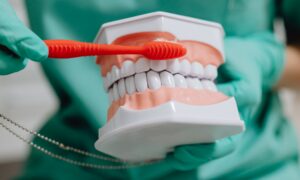
Sign Number One: Bleeding When You Brush or Floss
This is the big one. And it’s also the most misunderstood.
A lot of patients tell themselves bleeding means they’re brushing too hard. Or that their gums just need to “toughen up.” But bleeding is actually a sign of inflammation. Your gum tissue is irritated and swollen, and the smallest amount of pressure causes those tiny blood vessels to break.
Here’s what’s really happening. Bacteria builds up along your gumline. Your body sends an inflammatory response to fight it. That inflammation makes the tissue fragile. Bleeding is your gums waving a red flag, not a sign to back off.
If you notice blood on your toothbrush or in the sink after flossing, that’s not normal. And it’s not something a different brushing technique will solve.
Sign Number Two: Gums That Look Red, Swollen, or Shiny
Take a good look in the mirror. Pull your lip up and check the gum tissue around your teeth.
Healthy gums are pink and firm. They don’t puff up around your teeth. They don’t look shiny like they’re stretched tight. And they don’t feel tender to the touch.
Inflamed gums, on the other hand, look angry. They might be darker pink or even reddish. The tissue can look puffy or swollen. Sometimes the surface appears glossy or shiny instead of the normal dimpled texture (kind of like an orange peel).
These visual changes are easy to miss if you’re not looking for them. But they’re important clues that something beneath the surface needs professional attention.
Sign Number Three: Gums That Are Pulling Away From Your Teeth
This one is sneaky because it often doesn’t hurt. You might not notice it until someone points it out or until your teeth start looking longer than they used to.
Gum recession happens when the tissue pulls back, exposing more of your tooth or even the root underneath. You might feel a notch near the gumline with your fingernail. Or you might notice sudden sensitivity to cold or hot things because that exposed root isn’t protected by enamel.
Recession doesn’t happen overnight. It’s usually the result of ongoing gum disease that has been quietly progressing for months or years. And once gum tissue is gone, it doesn’t grow back on its own.
So What Should You Do?
If any of these signs sound familiar, here’s the good news. Gum disease is treatable, especially when caught early. But treatment requires more than just stepping up your home care.
Dr. Brent Engelberg at AH Smiles can evaluate what’s going on beneath your gumline. That might mean a deep cleaning procedure called scaling and root planing, which goes below the surface to remove bacteria that brushing can’t reach. It might mean more frequent cleanings to keep things under control. In some cases, additional treatment may be recommended.
The main point is this. Don’t ignore what your gums are trying to tell you. Bleeding, swelling, and recession are not normal. They’re not something you have to live with. And they’re not something a new toothbrush will fix.
Improve Your Gum Care Today
Our team at AH Smiles serves patients from Arlington Heights, Buffalo Grove, Long Grove, Deerfield, and Northbrook. Contact our office today to schedule a consultation. Your gums will thank you.