
You come to us with a tooth that’s been bothering you. Maybe it chipped while you were eating something hard. Maybe an old, large filling finally gave way. Or maybe the tooth has been through a root canal and just doesn’t feel as strong as it used to.
We take a look, and here’s what we often have to tell patients. A simple filling isn’t going to be enough. What you need is a dental crown. Let us explain what that means and why dental crowns nothing to be nervous about.
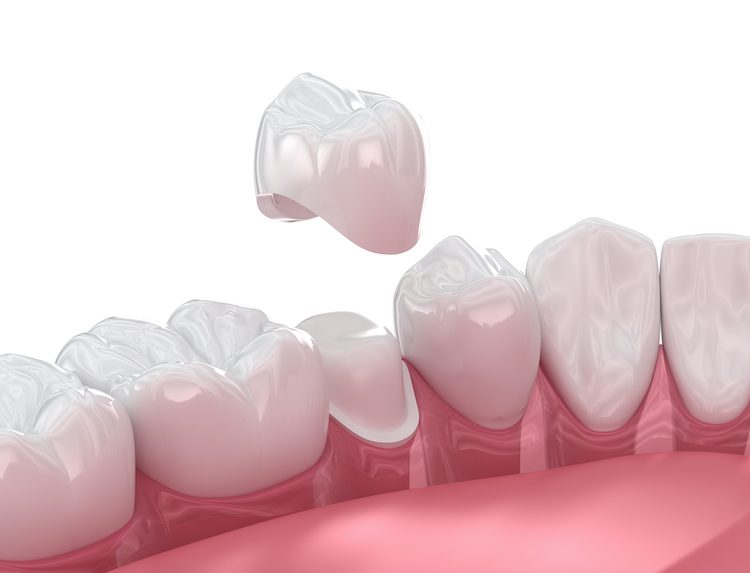
What a Crown Actually Is
A dental crown is a cap that fits completely over your natural tooth. Think of it like a helmet. It covers the entire visible part of the tooth, from the chewing surface all the way down to the gumline.
Fillings only patch a small area. Crowns protect the whole tooth. When a tooth has lost too much structure, from decay, chipping, or wear, a crown holds everything together and often prevents bigger problems down the road.
We make our crowns out of porcelain or ceramic materials that match your natural tooth color. No metal showing. No dark lines at the gumline. Just a tooth that looks like a tooth.
When We Recommend Crowns
Not every tooth needs a crown. But here are the situations where we almost always recommend one.
- Large cavities. If a cavity is too big for a filling to handle safely, a crown is the better choice. Fillings on large cavities can lead to the tooth chipping later.
- Chipped teeth. A chip that goes deep into the tooth won’t stay stable with just a filling on top. Chewing puts pressure on that chip, and eventually the tooth can fracture. A crown wraps around the damage and holds it together.
- After root canals. When a tooth has a root canal, it becomes more brittle over time. Placing a crown protects that tooth from fracturing years down the road.
- Worn down teeth. Some people grind their teeth so much that the chewing surfaces flatten. Crowns could rebuild that height and restore normal function.
What to Expect From Us
Getting a crown with us takes two appointments. First, we numb the area so you’re comfortable. Then we shape the tooth, removing just enough enamel to make room for the crown. We take impressions of your tooth and the teeth around it. Those impressions go to a lab where skilled technicians craft your permanent crown.
Before you leave, we place a temporary crown. It protects your tooth and looks natural enough that no one will notice the difference for the two or three weeks the lab needs. Once your permanent crown is ready, we remove the temporary one and check the fit and color of the new crown. If everything looks right, and we’re picky about this because we want it to be perfect, we bond it permanently in place.
How Long Crowns Last
With good care, crowns last 10 to 15 years on average. Some patients get twenty years or more out of theirs. The crown itself won’t decay, but the tooth underneath still can. That’s why brushing, flossing, and seeing us regularly still matter.
We also tell patients to avoid chewing ice or using their crowned tooth to open packages. Treat it like you’d treat a natural tooth, and it will serve you well for a long time.
A Simple Process for a Big Problem
Crowns sound serious. And they are. They’re one of the most reliable ways to save a tooth that might otherwise need to be pulled. But the process itself is straightforward and nothing to lose sleep over.
Our team at AH Smiles serves patients from Arlington Heights, Buffalo Grove, Long Grove, Deerfield, and Northbrook. If you have a tooth that’s been bothering you or an old filling that feels like it’s failing, give us a call. We’ll take a look and let you know if a crown is the right answer.