
A dental implant in Arlington Heights is a serious investment. It’s a surgical procedure, a months-long healing process, and a significant financial commitment. So when it fails, the first question patients ask is usually “what went wrong?” The answer is not what they expect. It’s not an infection, a failed graft, or bad luck. It’s the bite!
An implant doesn’t have a periodontal ligament. A natural tooth does. That ligament is a shock absorber, a tiny cushion of tissue that allows the tooth to move slightly under pressure and absorb the forces of chewing and grinding. An implant is fused directly to bone, so there’s no cushion. Every force that hits an implant goes straight into the bone and the surrounding structures.
That’s why an unbalanced bite is one of the most overlooked causes of implant failure. If the implant takes more force than the surrounding teeth, or if the jaw joints don’t function smoothly, the implant can lose bone, loosen, or fail entirely. In most dental offices, the bite isn’t evaluated with the same rigor as the bone or the gums.
Dr. Brent Engelberg is a dental implant specialist who takes a different approach at AH Smiles in Arlington Heights. He’s a member of the American Equilibration Society, a professional organization dedicated specifically to the study of occlusion, or the way teeth meet and function together. He uses BioJVA technology to objectively measure jaw joint function before placing any implant. That level of diagnostic rigor is something most practices don’t offer, and it’s why his implant results are built to last.
Here’s why the bite matters, and what to look for before you commit to an implant.
The Anatomy Problem
Let’s start with why implants are different from natural teeth. A natural tooth sits in a socket in the jawbone, suspended by the periodontal ligament. That ligament does several things. It allows the tooth to flex slightly under pressure. It provides sensory feedback so your brain knows how hard you’re biting, and it acts as a shock absorber.
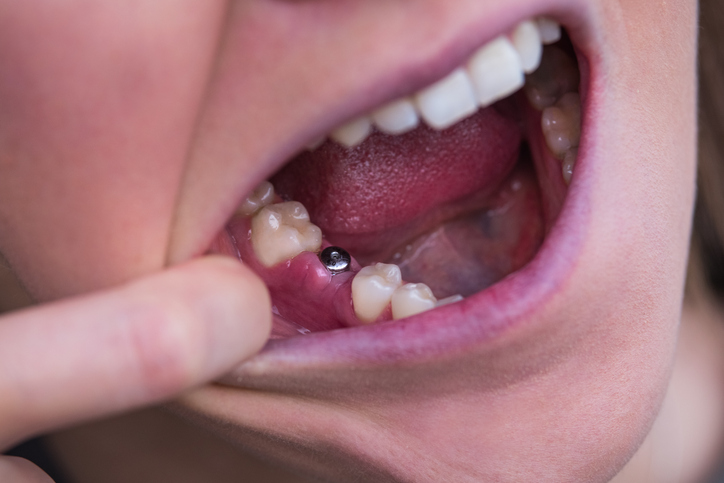
An implant has none of that. It’s a titanium screw fused directly to bone. When you bite down on an implant, the force goes straight into the bone with no cushion, no flexibility, and no sensory feedback. The implant takes the load and can’t tell you when you’re biting too hard.
That’s fine if the bite is balanced. If the forces are distributed evenly across the implant and the surrounding teeth, the implant can handle the load for decades. But if the bite is unbalanced, the implant takes more force than it should, and the surrounding bone can start to break down.
This is called occlusal trauma. It’s a well-documented cause of implant failure, and it’s frequently missed because most dentists don’t evaluate the bite with the same rigor they apply to bone density or gum health.
Why Most Dentists Miss It
Most implant planning focuses on three things: bone volume, gum health, and implant position. Those are critical, and no implant should be placed without evaluating them.
But the bite is a fourth factor that gets less attention. For example:
- Bite evaluation is subjective. A dentist can look at how your teeth meet and make a judgment, but that judgment is based on visual observation and the patient’s feedback. Both can be misleading, especially for patients who’ve adapted to an unbalanced bite over years without realizing it.
- Many dentists don’t have the technology to measure bite function objectively. They rely on articulating paper, which shows where teeth contact but not how the jaw joints function or where forces are concentrated.
- Implant planning often happens in isolation. The surgeon places the implant, the restorative dentist designs the crown, and neither one evaluates the whole system. If nobody’s checking the bite as a whole, the implant goes in without a full picture of the forces it will encounter.
Dr. Engelberg uses BioJVA technology to objectively measure the jaw joints. BioJVA analyzes the temporomandibular joints for friction and stress during movement. It’s the kind of diagnostic data that turns bite evaluation from a subjective judgment into an objective measurement.
What BioJVA Actually Measures
BioJVA is a joint vibration analysis device. It records the vibrations and sounds your jaw joints produce as they move. Healthy joints produce a smooth, consistent pattern. Joints with friction, inflammation, or misalignment produce a different pattern, one that can be measured and compared.
The data helps Dr. Engelberg understand several things:
- Whether the jaw joints are functioning smoothly. If there’s friction or stress, the joints aren’t moving the way they should. That can affect how the bite functions and how forces are distributed.
- Whether the bite is balanced. If one side of the jaw takes more force than the other, or if one joint works harder than the other, BioJVA can detect it.
- Whether underlying issues could affect implant longevity. If the bite is unbalanced or the joints are stressed, an implant placed into that system is at higher risk of occlusal trauma.
BioJVA isn’t a replacement for a clinical exam. It’s an additional data point that helps Dr. Engelberg plan more accurately. Combined with the other diagnostic tools at AH Smiles, including Overjet AI, digital X-rays, and intraoral cameras, it gives a complete picture of the patient’s oral health before any treatment begins.
What This Means for Implant Planning
When Dr. Engelberg plans an implant, the bite evaluation is part of the initial workup. If the bite is balanced and the jaw joints are functioning well, the implant can be planned with confidence. The forces will be distributed evenly, and the implant has a good chance of lasting for decades.
If the bite is unbalanced or the jaw joints show signs of stress, that needs to be addressed before or during the implant process. Sometimes that means adjusting the bite on the surrounding teeth. Sometimes it means using a night guard to protect the implant from grinding forces, or even a different restoration approach altogether.
The point is that the implant isn’t planned in isolation. It’s planned as part of a system, and the system has to be functioning well for the implant to succeed.
The American Equilibration Society Connection
Dr. Engelberg’s membership in the American Equilibration Society is worth understanding. The AES is a professional organization dedicated to studying occlusion and how the teeth, jaw joints, and muscles work together. Membership requires a commitment to ongoing education in this area, and it signals that the dentist takes bite function seriously.
That’s a meaningful credential for implant patients. Most dentists who place implants have training in surgery and restoration. Fewer have specific training in occlusion and bite function. The combination matters, especially for complex cases where the bite is already compromised.
What the Research Says
The connection between occlusal trauma and implant failure is well-documented in the dental literature. Studies have shown that excessive force on an implant can lead to bone loss around the implant, loosening, and eventual failure. The research also shows that patients with bruxism (grinding) and those with unbalanced bites are at higher risk.
What’s less common is a practice that evaluates bite function as part of every implant workup. That’s the gap AH Smiles is filling.
Learn more about our implant dentistry here:
- Dental Implants in Arlington Heights
- Benefits of Dental Implants
- Dental Implant Cost
- Dental Implant FAQs
- Dental Implant Process
- Dental Implants vs Dentures
- Multiple Dental Implants
- Single Dental Implants
What Patients in Arlington Heights Should Know
If you’re considering an implant in Arlington Heights, Buffalo Grove, Long Grove, Deerfield, Northbrook, or anywhere in the northwest suburbs, here are a few things to ask before you commit:
- Will you evaluate my bite before placing the implant? A good implant dentist will say yes. The answer should include how the bite will be evaluated, not just whether it will be.
- Do you use objective measurement tools? BioJVA, T-Scan, and similar technologies provide objective data about bite function. If the practice relies only on visual inspection, that’s a limitation.
- What happens if my bite is unbalanced? Ask how they will address it before, during, or after the implant process.
- How do you screen for bruxism? Grinding is a major risk factor for implant failure. A good practice will screen for it and recommend a night guard if needed.
At AH Smiles, the answer to all these questions is part of the standard workup. Dr. Engelberg evaluates the bite, screens for grinding, and uses BioJVA to measure jaw joint function before placing any implant.
Schedule a Visit Today
An implant is only as strong as the bite it functions in. If the bite is unbalanced, the implant is at risk, no matter how well the surgery is performed or how good the restoration looks.
Dr. Engelberg’s specialist approach at AH Smiles is to evaluate the bite before the implant, not after it fails. The combination of BioJVA, Overjet AI, and his AES membership gives patients a level of diagnostic rigor that most practices don’t offer.
If you’re considering an implant, call AH Smiles at (847) 230-9703 or request an appointment online. The practice serves Arlington Heights, Buffalo Grove, Long Grove, Deerfield, Northbrook, and the surrounding northwest Chicago suburbs.
Your implant deserves a bite that can support it. Let’s make sure it has one.