
Here’s a scenario that happens more often than you’d think. The implant surgery went well, healing went smoothly, and the implant is solid, integrated, and healthy. Everything is fine.
Except the crown. The crown on top of the implant doesn’t feel right. It sits too high when you bite down, feels bulky against your tongue, and food gets stuck around it. It no longer matches the shade of the surrounding teeth.
You’re frustrated, and you’re not sure what to do. The surgeon says the implant is fine. The restorative dentist says the crown is fine, but you’re the one living with a tooth that doesn’t feel like your own.
At AH Smiles in Arlington Heights, Dr. Brent Engelberg sees this situation regularly. As a cosmetic dentist with an eye for aesthetic detail and a member of the American Academy of Cosmetic Dentistry, he approaches implant crowns differently than a general dentist might. The implant is the foundation, but the crown is the result. If the result isn’t right, the whole thing isn’t right.
Here’s why implant crowns can feel off, and what you can do about it.
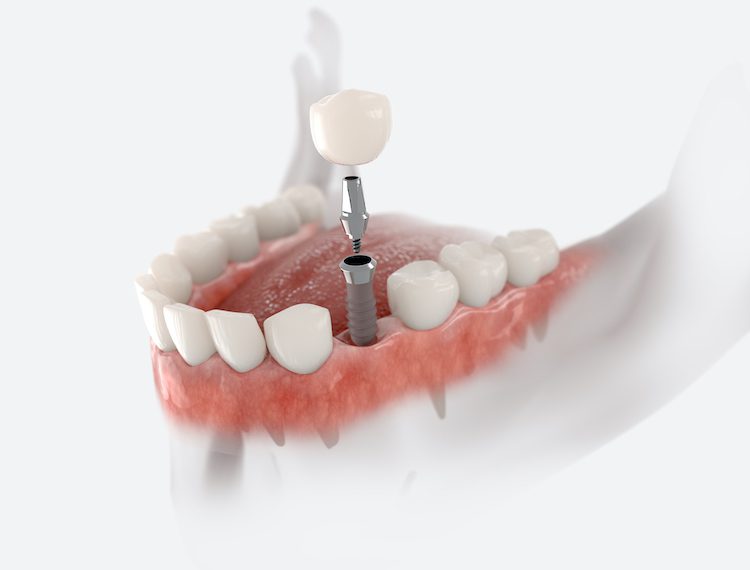
Why Implant Crowns Are Different From Natural Crowns
A crown on a natural tooth sits on a tooth with a periodontal ligament. That ligament provides sensory feedback, so your brain knows how hard you’re biting and where the tooth is in space. The crown can be adjusted based on that feedback.
An implant crown sits on top of a titanium post that’s fused directly to bone. There’s no ligament, no sensory feedback, and no natural cushion. The crown has to be designed and adjusted based on objective measurements, not on the patient’s sensation.
That makes the design and adjustment more challenging. A crown that feels perfect to the dentist in the chair might feel wrong to the patient once they start using it. Because the implant doesn’t have the same feedback mechanisms as a natural tooth, the patient might not realize something is off until days or weeks later.
The Common Reasons an Implant Crown Feels Wrong
Here are the most common reasons an implant crown doesn’t feel right:
- The bite is too high. This is the most common complaint. If the crown contacts before the surrounding teeth, it feels high when you bite down. Over time, a high crown can cause jaw pain, headaches, and uneven wear on the crown or the opposing tooth.
- The contour is wrong. The crown might be too bulky, too narrow, or shaped differently from the natural tooth it replaced. This can affect how it feels against your tongue, how food moves around it, and how it looks when you smile.
- The contacts are off. The crown needs to make proper contact with the adjacent teeth. If the contacts are too tight, floss won’t pass through. If they’re too loose, food gets trapped, and the adjacent teeth can shift.
- The shade doesn’t match. This is a cosmetic issue rather than a functional one, but it matters just as much to the patient. A crown that’s too white, too opaque, or the wrong tone will stand out every time you smile.
- The margin is visible. The margin is where the crown meets the gum. If it’s not seated correctly, or if the gum has receded, the margin can be visible. This can look unnatural and can also trap bacteria.
- The crown is loose. A crown shouldn’t feel loose. If it does, the cement may have failed, or the abutment may be loose. This needs to be evaluated quickly.
The crown feels different from your other teeth. Some patients describe a general “off” feeling that’s hard to put into words. It might be the shape, the texture, how it reflects light, or how it feels when you run your tongue over it. A good cosmetic dentist will take that feedback seriously.
Why Dr. Engelberg’s Approach Is Different
Dr. Engelberg is a cosmetic dentist first. His training and his professional memberships, including the American Academy of Cosmetic Dentistry, reflect a focus on aesthetic outcomes, not just functional ones.
That matters for implant crowns because the crown is the visible result. It’s the part the patient sees in the mirror and in photos. It determines whether the implant looks like a natural tooth or a piece of dental work.
Dr. Engelberg’s specialist approach to implant crowns includes several elements that a general dentist might not prioritize, such as:
- Digital planning. The crown is designed digitally before it’s fabricated. This allows precise control over shape, contour, and shade.
- CEREC same-day crown technology. For some implant crowns, the crown can be designed, milled, and placed in a single visit. That means no temporary, no waiting, and no second appointment to adjust the fit.
- Aesthetic evaluation. Dr. Engelberg looks at the crown in the context of the whole smile. He evaluates the shade, the shape, and how the crown reads against the surrounding teeth.
- Bite evaluation. He checks the bite carefully after the crown is placed. If the crown is too high or making uneven contact, he adjusts it before the patient leaves.
- Patient feedback. He listens when the patient says something feels off. The patient is the one living with the crown, and their feedback matters.
What to Do If Your Implant Crown Feels Wrong
If your implant crown doesn’t feel right, here’s what to do:
- Call your dentist. Don’t wait to see if it resolves on its own. A crown that feels high, loose, or uncomfortable usually needs an adjustment.
- Describe what feels wrong. Is it high? Loose? Bulky? Does it trap food? Does it look different from the other teeth? The more specific you can be, the easier it is for the dentist to diagnose.
- Ask for a bite check. If the crown feels high, ask the dentist to check the bite. A small adjustment can often resolve the discomfort.
- Ask about the shade. If the crown doesn’t match the other teeth, ask whether the shade can be adjusted or whether the crown needs to be remade.
- Get a second opinion if needed. If your dentist can’t or won’t address the issue, a second opinion from a cosmetic dentist can help. Dr. Engelberg evaluates implant crowns regularly and can recommend the right fix.
What the Fix Looks Like
The fix depends on what’s wrong, such as:
- If the bite is high, the crown can be adjusted. A small amount of reshaping brings it into balance, and the discomfort usually resolves quickly.
- If the contour is wrong, the crown may need to be recontoured or remade. A crown that’s too bulky or the wrong shape can’t always be adjusted without compromising the restoration.
- If the contacts are off, the crown may need adjustment or replacement. Proper contacts are essential for preventing food trapping and adjacent tooth shifting.
- If the shade is wrong, the crown may need to be remade. Porcelain can’t be whitened or recolored once it’s been fired, so a shade mismatch usually means a new crown.
- If the crown is loose, the cause needs to be evaluated. If the cement failed, it may be re-cementable. If the abutment is loose, that needs to be tightened. If the implant itself is compromised, that needs to be addressed.
At AH Smiles, Dr. Engelberg evaluates the crown, the implant, and the bite to determine the right fix. In many cases, a small adjustment solves the problem. In some cases, a new crown is needed. Either way, the goal is a crown that looks and feels like it belongs in your mouth.
Learn more about our dental implant specialist and dentistry here:
- Dental Implants in Arlington Heights
- Benefits of Dental Implants
- Dental Implant Cost
- Dental Implant FAQs
- Dental Implant Process
- Dental Implants vs Dentures
- Multiple Dental Implants
- Single Dental Implants
Why Cosmetic Expertise Matters for Implant Crowns
An implant crown isn’t just a functional restoration. It’s a visible part of your smile. The difference between a crown that looks natural and one that looks like dental work comes down to the details: shade, translucency, shape, and how it reflects light.
Dr. Engelberg’s cosmetic training and his AACD membership reflect a focus on those details. He’s not just placing a crown. He’s designing a tooth that fits your face and your smile.
That’s a different level of care than a general dentist who places implants and restorations as part of routine practice. It’s the level of care that patients expect when they’re investing in an implant.
What Patients in Arlington Heights Should Know
If you have an implant crown that doesn’t feel right, and you’re in Arlington Heights, Buffalo Grove, Long Grove, Deerfield, Northbrook, or anywhere in the northwest suburbs, AH Smiles can help.
Our Arlington Heights dental practice is conveniently located for patients across the area. It accepts most dental insurance as a non-participating provider, and CareCredit financing is available. The team is experienced with implant crowns and can evaluate fit, bite, and aesthetic results.
Call AH Smiles at (847) 230-9703 or request an appointment online anytime!