
You look in the mirror one day and notice something different. Your teeth look longer than they used to. Or you feel a sharp twinge when you drink something cold. Maybe you can see the root of a tooth where your gum used to be. What you’re seeing is gum recession. It’s common, and many people ignore it until it becomes uncomfortable or affects their smile.
What Is Gum Recession?
Your gums should cover the root of each tooth completely. That pink tissue protects the root and keeps bacteria out. When gums recede, they pull back and expose the root surface.
That exposed root isn’t protected by enamel the way your tooth’s crown is. It’s softer and more vulnerable to decay. It’s also more sensitive because the nerves inside the tooth are closer to the surface.
Gum recession can happen gradually over years. You might not notice it until a significant amount of gum tissue is gone.
What Causes It
There isn’t one single cause. Usually it’s a combination of factors.
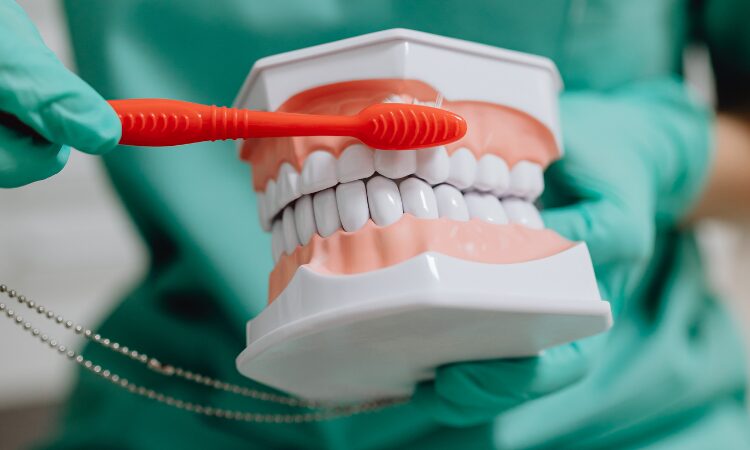
- Brushing too hard: This is one of the most common causes we see. When you brush aggressively with a hard-bristled brush, you wear away gum tissue over time. It’s like sanding wood. A little each day adds up.
- Gum disease: Periodontal disease destroys the tissue and bone that support your teeth. As the disease progresses, gums pull away from the teeth. This is the most serious cause of recession.
- Genetics: Some people are simply predisposed to thinner gums or a receding gumline. It runs in families.
- Grinding and clenching: The extra force from grinding stresses your gums and the ligaments that hold your teeth in place. Over time, that can contribute to recession.
- Misaligned teeth: When teeth aren’t in the right position, the gum tissue around them can be thinner in some areas. Those thin areas are more prone to recession.
- Aging: As we get older, our gums naturally recede a bit. It’s part of the aging process.
Why It Matters
Gum recession isn’t just a cosmetic concern. It has real consequences for your oral health.
Exposed roots are more prone to cavities. They’re also more sensitive to hot and cold. And if recession progresses far enough, it can affect the stability of your teeth.
Cosmetically, recession can make your teeth look long and uneven. It can also create dark triangles between your teeth where the gum has pulled away.
Can It Be Fixed?
The short answer is yes, but it depends on how advanced the recession is. For mild recession, we focus on preventing it from getting worse. That means addressing the cause. If you’re brushing too hard, we’ll show you a gentler technique. If you’re grinding, we can fit you with an oral appliance.
For moderate to severe recession, we may recommend a gum graft. In this procedure, we take a small amount of tissue, usually from the roof of your mouth, and attach it to the receding area. The graft covers the exposed root and prevents further recession.
Gum grafting sounds intimidating, but it’s a routine procedure. We numb the area, so you don’t feel pain during the surgery. Recovery takes a week or two, and most patients are surprised by how manageable it is.
What You Can Do
If you’re noticing recession, don’t wait. Call us. We’ll evaluate the cause and talk about your options. In the meantime, switch to a soft-bristled toothbrush. Brush gently in small circles. And if you grind your teeth at night, ask us about a night guard.
Our team at AH Smiles serves patients from Arlington Heights, Buffalo Grove, Long Grove, Deerfield, and Northbrook. Call us or request an appointment online. We’ll help you protect your gums and keep your smile healthy for years to come.